Pizza Guides
Vegetarian Pizza Done Right
Vegetarian pizza is not a consolation prize. Done right, it is bright, satisfying, and full of flavour. Here is how to build one that converts skeptics.

Vegetarian pizza has an image problem. Too often it is a sad scatter of raw vegetables that release water and steam the crust into mush, served as an obligatory option rather than a genuine highlight. But a well-built vegetable pizza can be the best one on the table, bright, hearty, and satisfying enough that even committed meat-eaters reach for a second slice. The difference is technique, not luck. Here is how to do vegetarian pizza right.
Respect the moisture problem
Vegetables are full of water, and water is the enemy of a crisp crust. This is the single biggest reason vegetable pizzas fail. The most important step in a great vegetarian pizza is managing that moisture before it ever reaches the dough. Many vegetables benefit hugely from being cooked or partly cooked first, so they release their water in the pan instead of all over your crust.
- Pre-cook the wet ones: mushrooms, peppers, onions, and zucchini improve dramatically with a quick saute or roast first.
- Use juicy items sparingly: fresh tomato is delicious but should be sliced thin and used in moderation.
- Pat things dry: a simple step with washed or canned vegetables that makes a real difference.
Build flavour in layers
Without meat to provide savoury richness, you build depth in other ways. This is where vegetarian pizzas are won or lost. Reach for ingredients that bring concentrated, savoury flavour: caramelised onions, roasted garlic, a good drizzle of olive oil, fresh herbs added after baking, and cheeses with real character. The goal is layers of flavour, not just a pile of produce sitting on cheese.
A great vegetarian pizza is composed, not assembled. Every vegetable earns its place and contributes a flavour or texture.
Texture is everything
Meat brings chew and richness, so a vegetable pizza has to find interest in texture elsewhere. The trick is contrast: combine soft and firm, sweet and sharp, tender and crisp, so each bite has something going on. Think roasted vegetables for sweetness and softness, olives for a salty bite, a sharp cheese for punch, and fresh greens added at the very end for a crisp, fresh note.
Combinations that win
- Mediterranean: roasted peppers, onion, olives, and a sharp cheese, bright and savoury.
- Garden classic: a careful mix of sauteed vegetables, not everything at once, balanced for moisture.
- Mushroom and caramelised onion: deep and meaty in flavour despite having no meat at all.
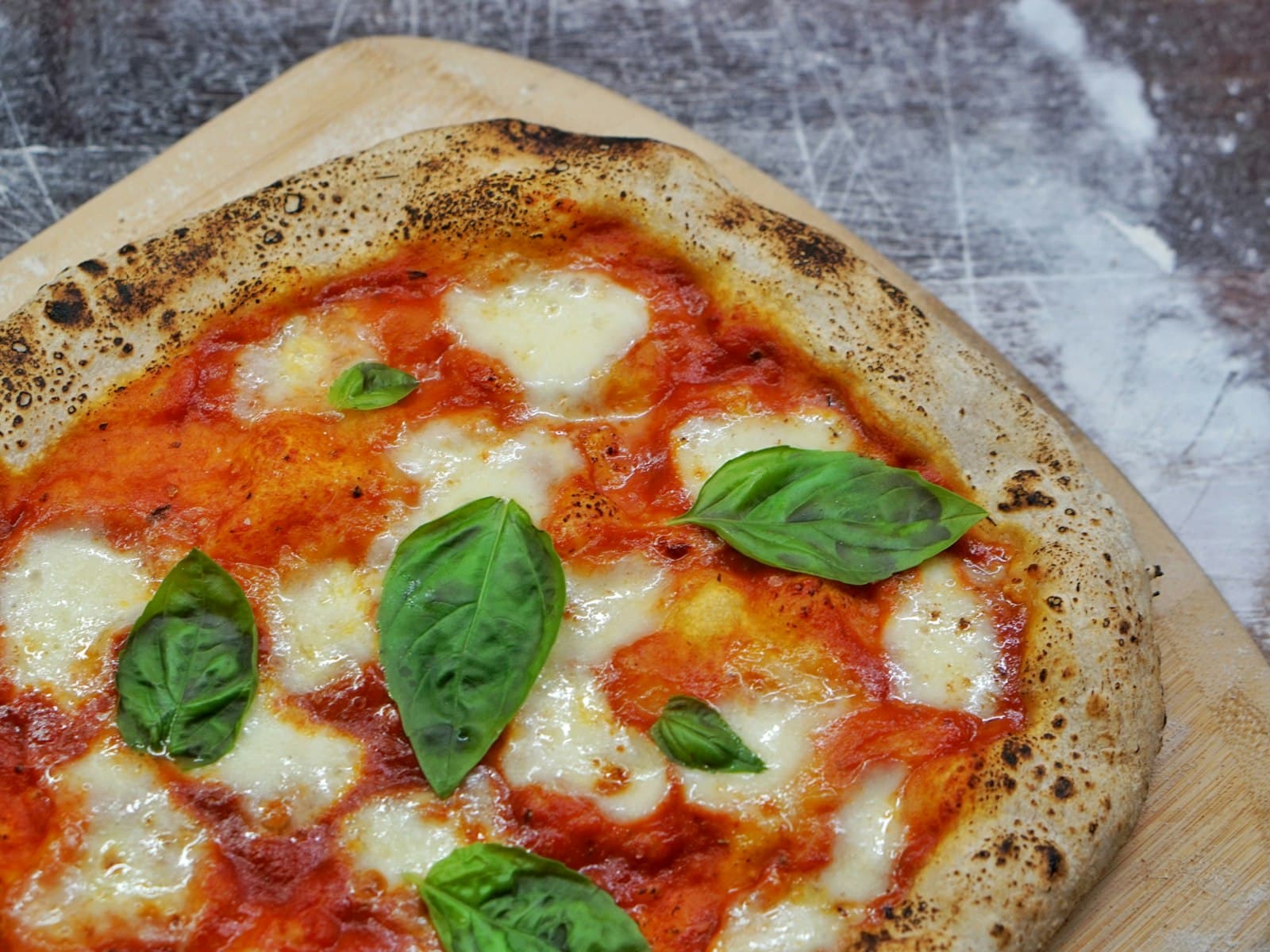
- Margherita: the original vegetarian pizza, and still one of the best. Read its story in our history of pizza.
For the broader principles behind these picks, see our ultimate guide to pizza toppings.
Choosing the right base
Vegetable pizzas often have a fair amount of moisture even after pre-cooking, so a base that crisps well helps. A thin, crisp crust keeps things light and lets the vegetables shine, while a sturdier base can carry a more loaded pizza. Our thin vs thick crust guide can help you choose.
Vegetarian and other diets
Vegetarian pizza is also a great starting point for other dietary needs at the table. It naturally suits many guests, and with a few checks it can work for more specific requirements too. If you are juggling several needs at once, our pizza for every diet guide can help you order so everyone is happy.
The best vegetables for pizza
Some vegetables are simply built for pizza, while others need more care. The reliable performers tend to be those that either start dry or improve with a little pre-cooking:
- Onions: sweet and savoury, especially when caramelised first.
- Peppers: bright and slightly sweet; even better lightly roasted.
- Mushrooms: deeply savoury, but saute them first to drive off the water.
- Olives: a salty, briny punch that needs no prep at all.
- Spinach and other greens: add at the end so they wilt rather than scorch.
Cheese choices for vegetarian pizza
With no meat to anchor the flavour, cheese carries more of the load on a vegetarian pizza, so it is worth choosing well. Mozzarella gives you the classic melt and stretch, but a little sharp or aged cheese adds the savoury depth that vegetables alone can lack. A blend often works better than a single cheese, balancing meltiness with character. Just keep the quantity in check, since a thoughtful amount beats a heavy blanket, as we explain in cheese-pull perfection.
Going further: vegan pizza
A vegetable pizza is also a natural stepping stone to a fully plant-based one. With good dough, a bright sauce, well-prepared vegetables, and a quality plant-based cheese, a vegan pizza can be genuinely excellent rather than a compromise. The same principles apply: manage moisture, build flavour in layers, and seek contrast in texture. If you are cooking for a mixed table, our pizza for every diet guide helps you cover everyone, plant-based eaters included.
Treat it as a real dish
The single biggest shift that improves vegetarian pizza is one of attitude: treat it as a dish in its own right, not as the meat version with the meat removed. When you compose a vegetable pizza on purpose, choosing each ingredient for the flavour and texture it brings, the result stands proudly on its own. Some of the most memorable pizzas have no meat at all, and that is exactly the point.
A simple build-your-own formula
If composing a vegetable pizza feels daunting, a simple formula takes the guesswork out of it. Start with a good sauce and a measured layer of cheese as your base, then add four things in these roles: one hero vegetable to lead, one allium like onion or garlic for savoury depth, one accent for contrast such as olives or a sharp cheese, and one fresh element like herbs or greens added after baking. That is it.
This structure works because it builds in everything a great vegetarian pizza needs: a clear star, a savoury backbone, a hit of contrast, and a fresh finishing note, all while keeping the topping count sensible so the crust still bakes well. You can swap any single role to create endless variations, a roasted pepper hero one week, a mushroom hero the next, without ever overloading the pizza.
Once you internalise the formula, you stop scattering random vegetables and start composing on purpose, which is exactly the mindset shift that separates a memorable vegetable pizza from a soggy afterthought. Apply the moisture and flavour principles above, and the formula rarely lets you down.
Frequently asked questions
Why is my vegetarian pizza always soggy?
Raw, high-moisture vegetables release water as they bake. Pre-cooking or limiting them solves the problem.
How do I make a vegetable pizza taste less plain?
Build savoury depth with caramelised onions, roasted garlic, herbs, and flavourful cheese, and add contrast with briny or sharp elements.
Is Margherita a vegetarian pizza?
Yes. Tomato, mozzarella, and basil make the Margherita a vegetarian classic and a benchmark for balance.
Can a vegetarian pizza be filling enough for a meal?
Absolutely. Hearty vegetables, a substantial crust, and good cheese make a vegetable pizza every bit as satisfying as a meat one.
Ready to give vegetables their moment? Build a vegetarian pizza and taste the difference care makes.